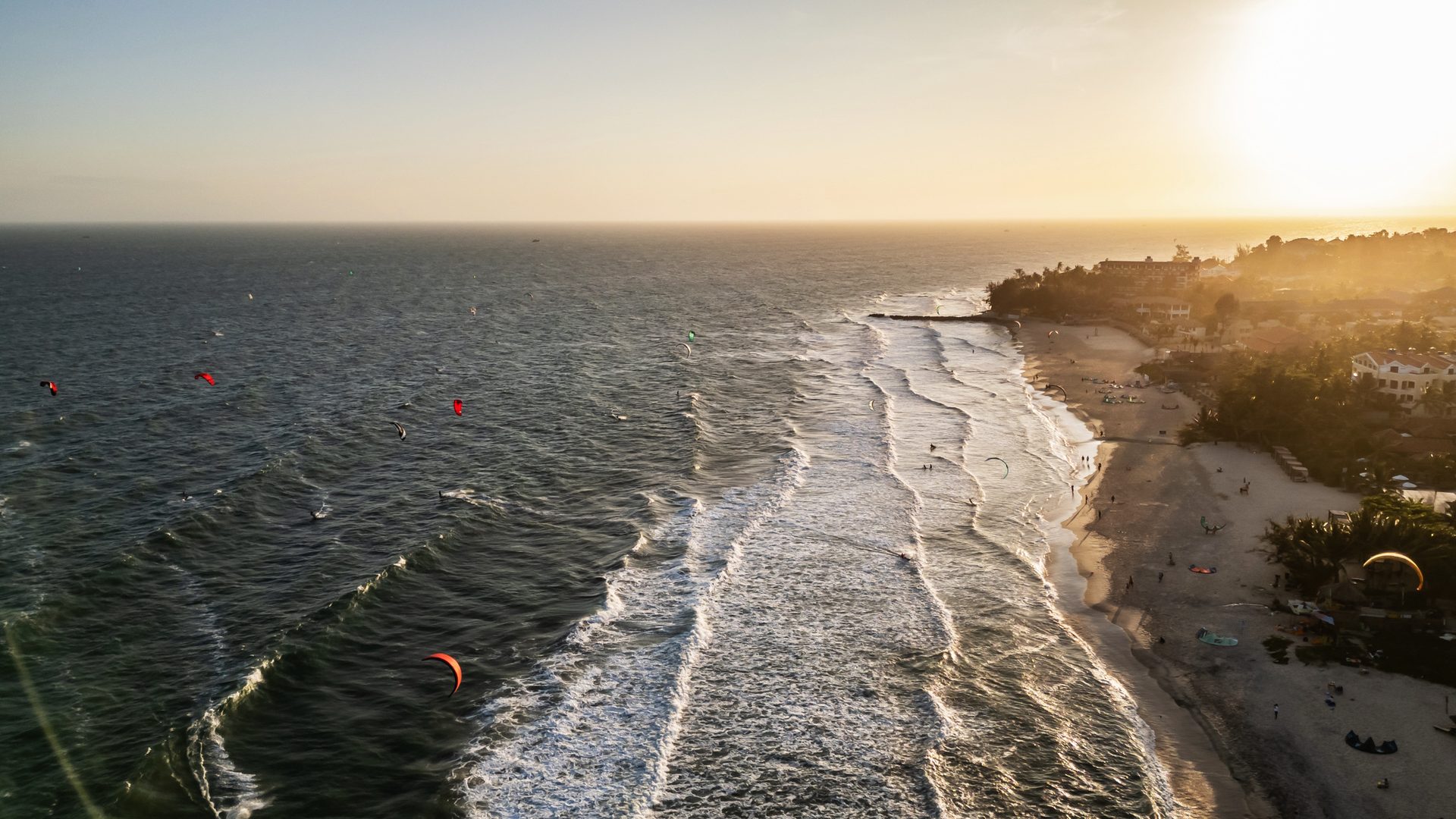
MUI NE,
BEYOND THE WIND.
What we tell riders in person, written by people who live at the end of the beach road.
TWO SPOTS
SEE
Five real, named places worth the early alarm or the late drive.

The working harbour: round basket boats, the morning catch coming in, and the part of Mui Ne that was here long before the kites.
Photo: Vyacheslav Argenberg · CC BY 4.0
A shallow warm stream you walk up barefoot, between red and white sandstone formations. Half an hour each way and no equipment.
Photo: Darren On The Road · CC BY 2.0
The closer set of dunes, red-orange and small enough to walk. The classic sunset stop.
Photo: Vyacheslav Argenberg · CC BY 4.0
Much bigger, much whiter, and further out — a genuine desert landscape with a freshwater lake beside it. Worth the drive.
Photo: Vyacheslav Argenberg · CC BY 4.0
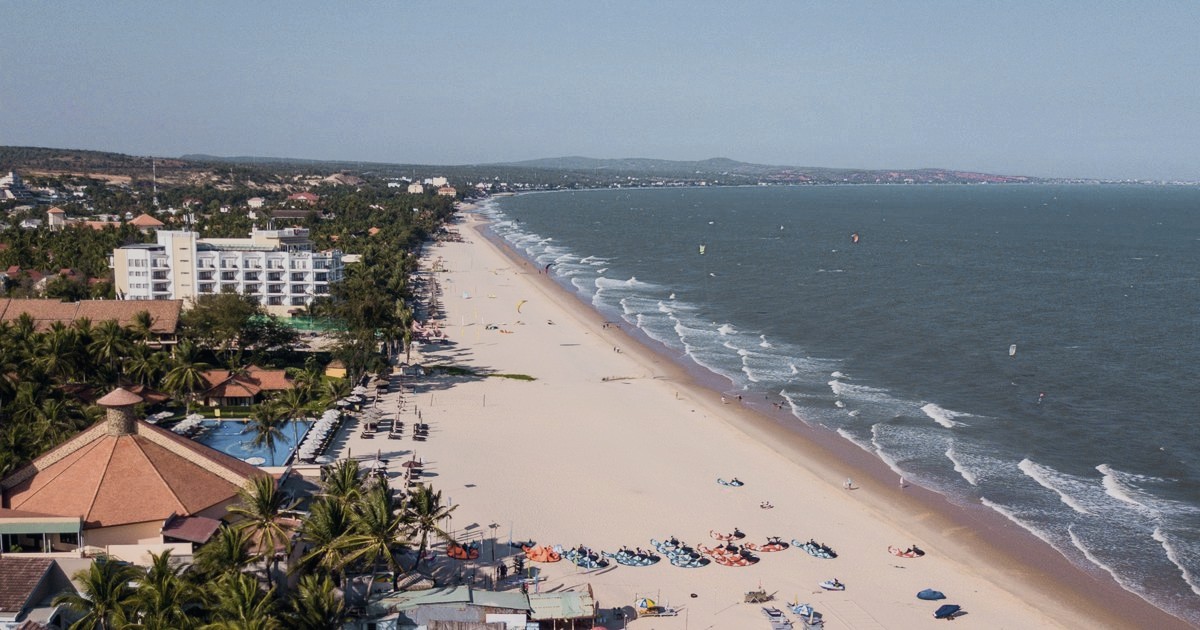
The strip itself, from the harbour to the far end of the beach. The simplest thing to do here and still the best.
Photo: Vyacheslav Argenberg · CC BY 4.0We do not print distances or ticket prices. Both change, and a stale number in a guide is worse than none — ask us on the day and you get the current answer.
A NO-WIND DAY
It happens. The good news is that a flat day in Mui Ne has a genuinely better itinerary than most kite towns.
The fishing village is a morning thing. By nine it is over for the day.
Red dunes are close; white dunes are the bigger trip. Both are better before the middle of the day.
Eat, sleep, do the work you were avoiding. This is the flat middle of every Mui Ne day, wind or not.
Shaded, shallow and short. Good use of an afternoon that has no wind in it.
Open the camera. Late thermal days happen, and the beach is a two-minute walk.
EAT
Only places the people who work here actually go — each category fills with two or three names.
Where the boats land. The category everyone asks about first.
The places staff eat at between shifts.
Open early enough to be useful before the wind.
Vietnamese coffee, and somewhere to sit with a laptop.
Cold drink, salt still on your arms, ten minutes from the water.
Week two of a long trip. No judgement.
Asked about constantly and worth naming properly.
The one place worth booking a table at.
GETTING AROUND
The default. Short distances, easy roads, and the only way the dunes and the harbour are convenient. Helmet on, and check your insurance covers it.
If you are staying near the centre, most of your day is walkable, which is the entire argument for staying close to the water.
Fine for the airport run or a rainy evening. We do not publish fares we do not set.
For arrival, departure and the white dunes trip. Rates per car are published on the transfer page.
GETTING HERE
The usual arrival. A private car from the airport is the simplest door-to-door option, and the rate is published per car.
Plenty of people spend a night or two in the city before coming out. We pick up from the hotel as readily as from the terminal — send us the address and we confirm the fare for it.
The other end. Same arrangement — one car, priced per car, never per kilometre — but no rate for it is on the published sheet, so we quote it by hand.
Traffic and route decide it, so we do not print a single number. Your driver confirms the plan the day before you fly.


Every place here opens in Google Maps. Accommodation is shown as areas rather than addresses: where to stay is a conversation, not a pin.
A FISHING TOWN
THAT THE WIND FOUND.
Mui Ne is a long strip of coast where a working fishing harbour, red dunes and a season of north-east trade wind happen to sit next to each other. That combination is the whole reason to come.
The north-east trade wind runs November to April. You can book a trip around it six months ahead and be right.
Waist-deep for a long way out, side-onshore wind. Beginners get to stand up and try again all day.
Red and white sand dunes inland, a working fishing harbour on the coast. Flat days here are not wasted days.
The beach road is the town. Nothing that matters to a rider is more than a short ride away.
THE MUI NE GUIDE
Wind, spots, seasons, getting here & our local favourites.